 Reviews
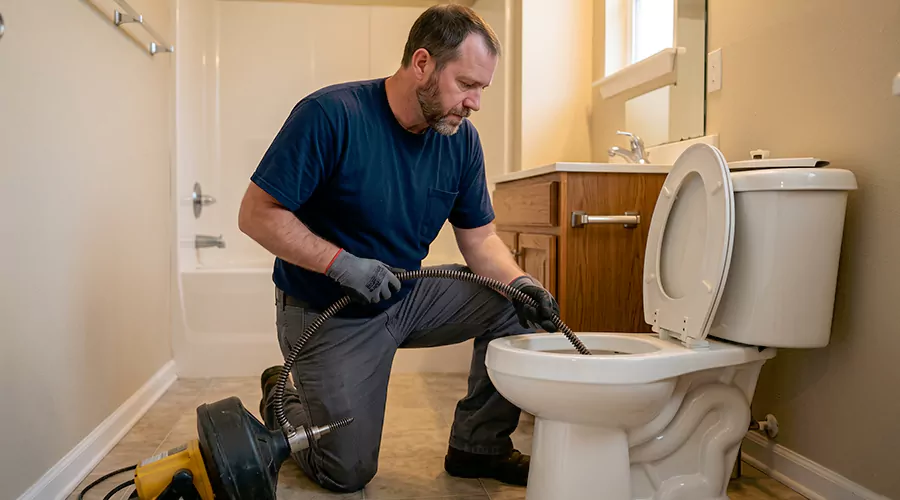
A sewer line can sometimes be accessed through the toilet opening after the toilet has been removed, but an installed toilet is usually not the preferred route for clearing a main sewer line. A dedicated sewer cleanout provides more direct access and reduces the risk of damaging the toilet.
A closet auger inserted through the bowl is designed primarily for blockages in the toilet's own trap and nearby drain. It is not a substitute for sewer line cleaning with a main-line sewer machine when several household fixtures are backing up. The distinction matters because a main sewer clog and an ordinary toilet clog require different equipment.
Can You Really Unclog a Main Sewer Through a Toilet?
The toilet drain can provide sewer access after the fixture is removed from its floor flange. This approach is sometimes used when no suitable cleanout is available. However, removing a toilet introduces additional work and a main-line power auger requires careful handling.
There are three different situations to distinguish:
| Situation | Appropriate Access | Typical Tool |
|---|---|---|
| Clog inside toilet trap | Through toilet bowl | Closet auger |
| Nearby toilet branch clog | Sometimes through toilet | Suitable auger |
| Main sewer blockage | Cleanout preferred | Main-line sewer auger |
| Main line with no accessible cleanout | Toilet may need removal | Appropriate sewer equipment |
| Root or structural problem | Cleanout plus inspection | Camera and suitable clearing method |
This Old House recommends a closet auger rather than an ordinary exposed cable for clogs inside the toilet because the tool is designed to protect the porcelain and follow the toilet's trap.
How Can You Tell the Clog Is Beyond the Toilet?
A single toilet that does not drain normally may have a local blockage. A main sewer clog becomes more likely when other fixtures react to flushing. Water rising in a shower or floor drain is a stronger warning sign than one toilet bowl draining slowly.
Check these symptoms before selecting a tool:
- Flush no additional toilets once a wider backup is suspected.
- Check whether nearby sinks drain normally.
- Observe the shower or bathtub.
- Check another toilet.
- Listen for gurgling.
- Look for wastewater entering lower drains.
- Inspect the sewer cleanout if it is safely accessible.
If the toilet is the only affected fixture, start with toilet-specific methods.
If several fixtures are affected, stop adding water to the system.
Why Is a Closet Auger Different From a Sewer Snake?
A closet auger is built to pass through the curved toilet trap without scratching the porcelain. Its cable is relatively short because most ordinary toilet clogs occur inside or immediately beyond the trap. Main sewer equipment uses much longer and heavier cable.
This difference matters for both effectiveness and safety.
A closet auger offers:
- A protective guide near the bowl.
- A cable designed for the toilet trap.
- Limited reach for local obstructions.
- Better control inside the fixture.
A main sewer machine offers:
- A much longer cable.
- Heavier construction.
- Different cutting heads.
- More rotational force.
This Old House warns that an ordinary exposed drain snake can scratch a toilet bowl and recommends using a closet auger for the fixture itself.
How Do You Try a Toilet Auger First?
If only the toilet is blocked, a closet auger is the correct mechanical tool to try after plunging fails. The tool can push through soft material or retrieve some objects inside the toilet trap. It should be advanced carefully rather than forced.
Use this procedure for an ordinary toilet clog:
- Stop flushing the toilet.
- Put on waterproof gloves.
- Place the auger's protective guide in the bowl.
- Feed the cable according to the tool instructions.
- Rotate the handle gradually.
- Stop at significant resistance.
- Work the cable gently.
- Retract it slowly.
- Remove captured debris.
- Test the toilet once.
If other drains remain backed up, clearing the toilet trap has not solved the main sewer problem.
Why Is the Sewer Cleanout Better for a Main-Line Clog?
A cleanout gives a sewer auger a more direct path into the main drainage pipe. It bypasses the toilet's internal trap and avoids removing the fixture. It also provides better access for camera inspection or other sewer equipment. Lowe's instructs users to locate the main cleanout when clearing a main household drain. Common locations include the basement or crawl space. A cleanout may also be in the garage or outside near the foundation. The cleanout should be opened carefully. Wastewater can stand behind the cap when the sewer is blocked.
When Would the Toilet Need to Be Removed?
Removing a toilet may provide access to the branch or main drain when the property has no usable cleanout. The toilet must be disconnected from the water supply and lifted from its floor flange. Reinstallation normally requires a new sealing ring.
This route creates several extra steps:
- The toilet tank and bowl must be prepared for removal.
- Remaining water needs to be controlled.
- The heavy fixture must be lifted safely.
- The floor flange must be protected.
- Main-line equipment must be fed through the open drain.
- The toilet must be reset with an appropriate new seal.
- The connection must be checked for leakage after reinstallation.
Removing a toilet solely to gain sewer access is much more involved than using a dedicated cleanout. For a suspected main-line obstruction, this is a reasonable point to consider professional equipment rather than turning the project into a fixture-removal job.
Should You Run a Main Sewer Snake Through the Installed Toilet?
A large main-line sewer cable should not simply be fed through an installed toilet bowl. The toilet's curved trap adds resistance and can damage the cable or fixture. Smaller exposed cables can scratch porcelain while larger sewer equipment is not designed to pass through the bowl.
The installed toilet route is appropriate for a closet auger designed for the fixture.
A main-line cable is better introduced through:
- A dedicated sewer cleanout.
- Another approved drainage access point.
- The toilet flange after fixture removal when appropriate.
Using the correct access point improves cable control and reduces unnecessary bends.
What Happens After the Toilet Is Removed?
Once the toilet is removed, the floor flange exposes the drain opening beneath the fixture. A suitable sewer cable can then be introduced into the drainage system when that route is appropriate. The work area must be protected against wastewater and sewer gases.
A qualified repair process generally includes:
- Protecting the surrounding floor.
- Removing residual toilet water.
- Disconnecting the water supply.
- Removing the fixture without damaging the flange.
- Covering or controlling the open drain when not actively working.
- Running appropriate sewer equipment.
- Confirming that the obstruction is cleared.
- Removing old sealing material.
- Installing a suitable new toilet seal.
- Resetting and testing the toilet.
This is not the same as snaking through the toilet bowl. The fixture has been removed so the drainage opening itself becomes the access point.
What Are the Risks of Clearing the Sewer Through the Toilet Opening?
Using the toilet flange as sewer access creates both sanitation and mechanical risks. Sewage can be present in the line. Powered sewer equipment also produces high torque and can injure an inexperienced operator or damage vulnerable piping.
Potential problems include:
- Sewage spilling into the bathroom.
- Damage to the toilet flange.
- Cracked porcelain during fixture removal.
- A new toilet seal installed incorrectly.
- Main-line cable binding inside the sewer.
- Damage to older underground pipe.
- Failure to remove the complete obstruction.
Sewage should be treated as a health hazard. Portland advises protective clothing and careful disinfection when a backup contaminates indoor surfaces.
What If the Sewer Snake Clears the Line Only Temporarily?
A sewer that blocks again soon after snaking may have roots or structural damage. A cable can create a temporary passage through an obstruction while leaving material around the pipe walls. A damaged pipe may continue catching waste after every cleaning.
Repeated blockage can justify a sewer camera inspection.
A camera can help identify:
- Root intrusion.
- Cracks.
- Displaced joints.
- Pipe sagging.
- Heavy remaining deposits.
- A collapsed section.
Angi reports that sewer camera inspection costs approximately 271–1,725 in the United States in 2026.
How Much Does Main Sewer Clearing Cost in 2026?
Main sewer clog clearing averages approximately $380 in the United States in 2026. Mechanical snaking can cost 100–250. Hydro jetting costs around 350–600 when the pipe condition and obstruction make it an appropriate option.
| Service | 2026 U.S. Cost |
|---|---|
| Main sewer clog repair average | $380 |
| Mechanical snaking | 100–250 |
| Hydro jetting | 350–600 |
| Camera inspection | 271–1,725 |
| Toilet removal and resetting | Additional labor may apply |
Do not add all of these amounts together. The required services depend on the actual blockage.
What Should You Avoid?
The toilet should not become a shortcut for using oversized equipment that belongs in a main cleanout. Choosing the wrong tool can damage porcelain or create a dangerous cable-control problem.
Avoid:
- Feeding a standard exposed metal snake aggressively through the bowl.
- Using a power sewer machine through an installed toilet.
- Repeatedly flushing a toilet during a suspected main-line backup.
- Pouring chemical cleaners into sewage-backed plumbing.
- Removing the toilet without controlling residual water.
- Reusing a failed toilet sealing ring.
- Operating a sewer machine without appropriate training.
The goal is to gain controlled access to the drainage system rather than forcing equipment through the fixture.
When Should You Call a Professional?
Professional sewer clearing is appropriate when the blockage lies beyond the toilet and no usable cleanout provides straightforward access. Removing the toilet and operating a main sewer machine adds complexity. Repeated blockages also require diagnosis of the sewer itself.
Seek professional help when:
- Several fixtures are backing up.
- Sewage enters the shower or floor drain.
- The toilet must be removed to reach the main line.
- A powered main-line auger is required.
- The cable repeatedly stops at one location.
- Root intrusion is suspected.
- The sewer becomes blocked again after clearing.
A professional can also inspect the sewer before hydro jetting an older or questionable pipe.
How Can You Prevent Another Main-Line Clog?
Prevention depends on keeping unsuitable waste out of drains and correcting defects that repeatedly trap material. Household habits can reduce grease or wipe accumulation. They cannot prevent recurrence when an underground sewer is cracked or badly misaligned.
Helpful practices include:
- Keep cooking grease out of kitchen drains.
- Flush only appropriate waste.
- Dispose of wipes in the trash.
- Maintain an accessible cleanout.
- Investigate recurring backups.
- Address confirmed root intrusion.
- Repair damaged sewer sections.
Conclusion
To unclog a sewer line through a toilet, first determine whether the obstruction is actually inside the toilet or farther into the sewer. A closet auger is suitable for the toilet trap. For a main sewer clog, the dedicated cleanout is normally the better access point. When no cleanout is available, the toilet may need removal before sewer equipment can be introduced through the flange. Repeated blockages deserve deeper inspection.
Frequently Asked Questions
Can I put a sewer snake directly through my toilet?
A closet auger is designed for the toilet itself. Large main-line sewer machines should use an appropriate drainage access point.
Do I have to remove the toilet to reach the sewer line?
Not when a suitable sewer cleanout is available. Toilet removal may be considered when better access is unavailable.
Why does my toilet clog when the main sewer is blocked?
Wastewater cannot move downstream, so the toilet and other low fixtures begin showing backup symptoms.
Will a toilet auger reach the main sewer?
Usually not. Closet augers are relatively short and intended for local toilet obstructions.
Why does the sewer clog return after snaking?
Remaining deposits or tree roots may still be present. Structural pipe damage can also cause recurring blockage.